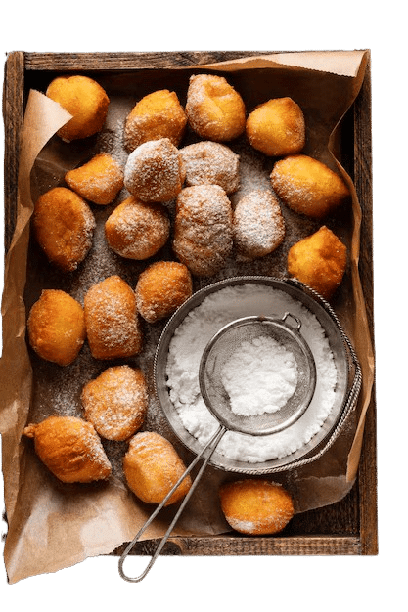
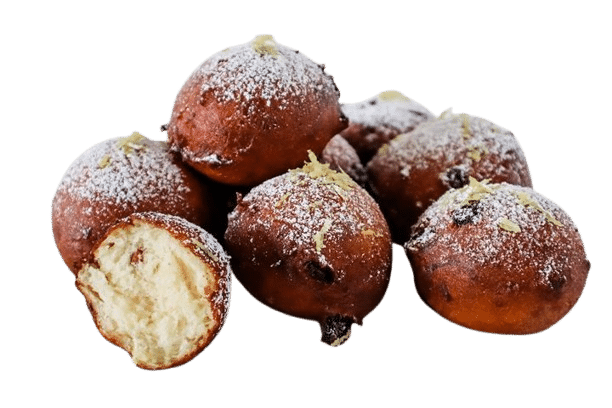
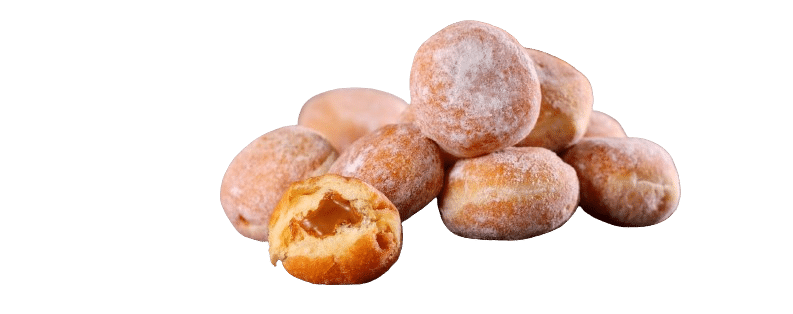
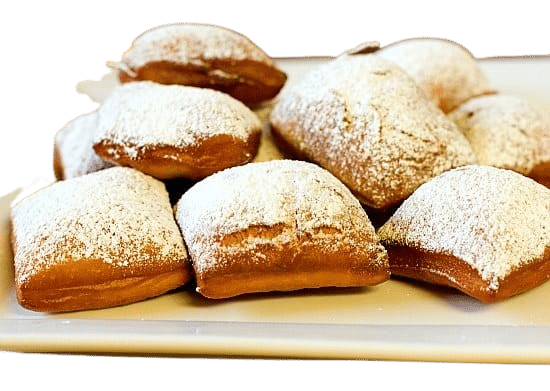
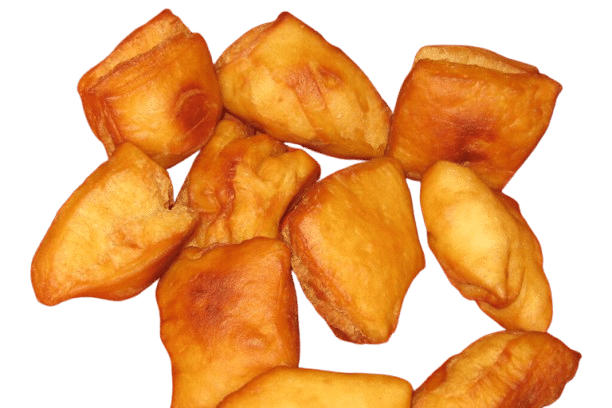
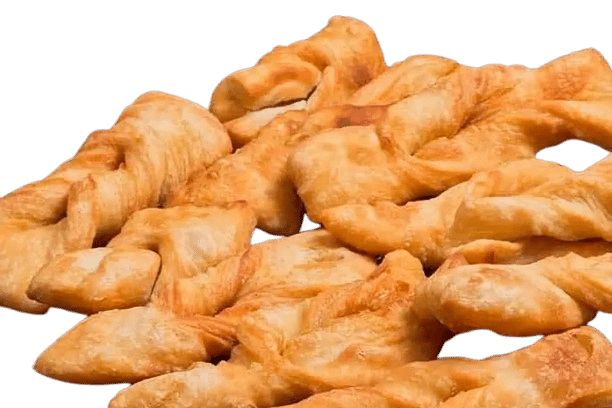
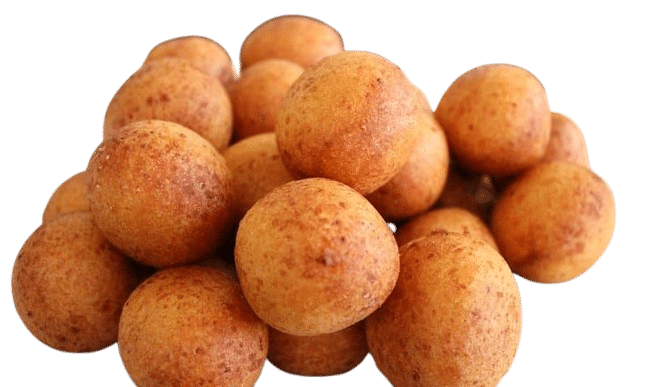
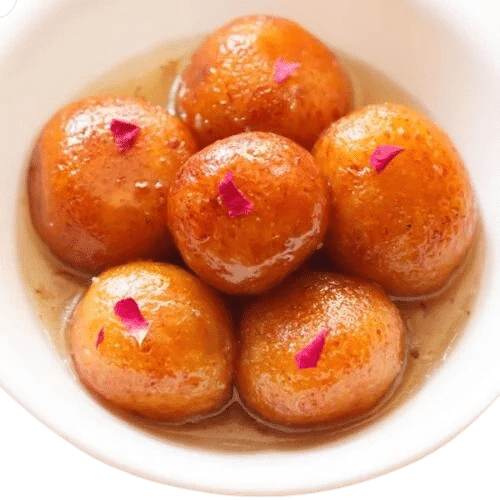
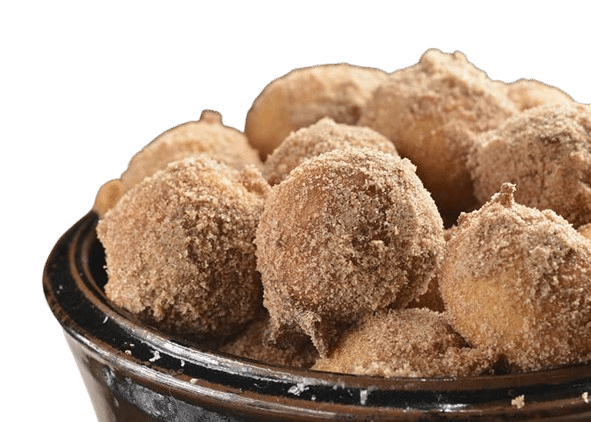
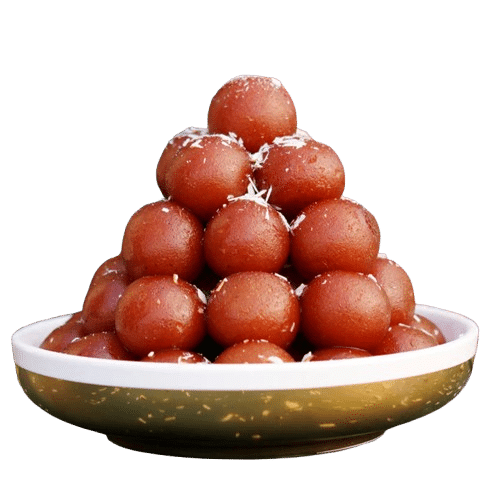
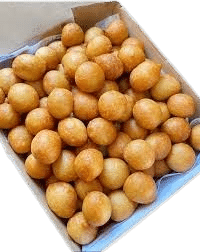
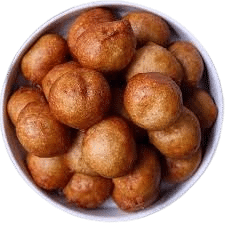
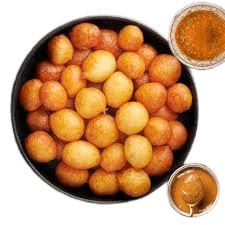
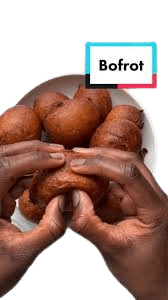
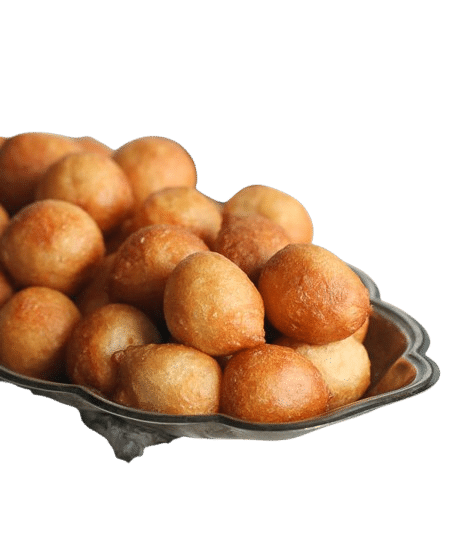
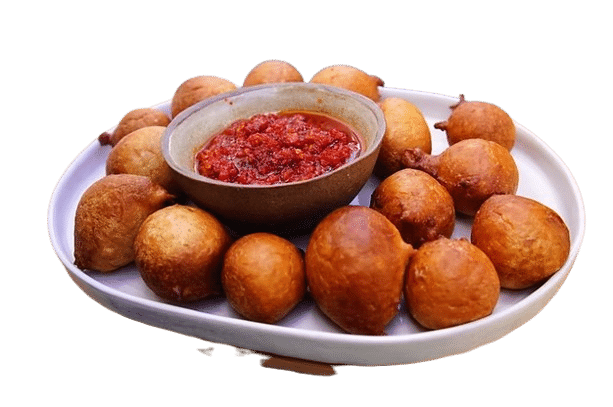
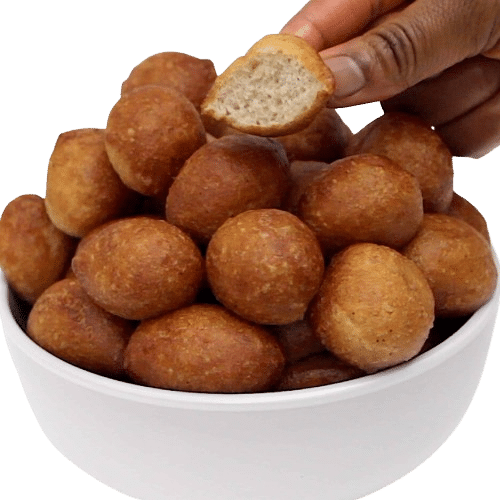
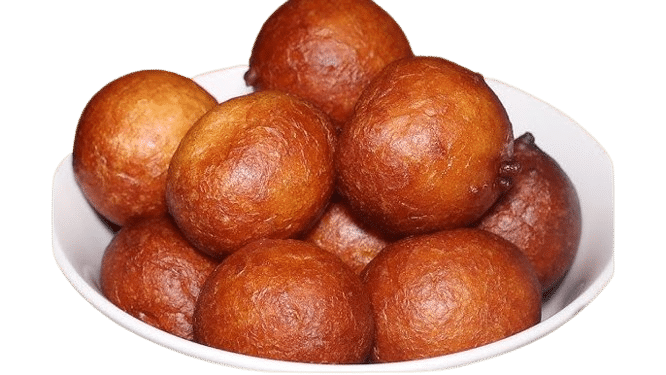
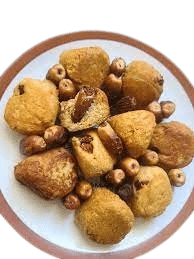
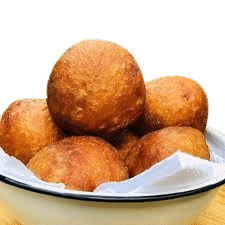
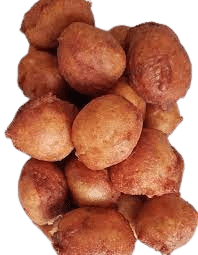
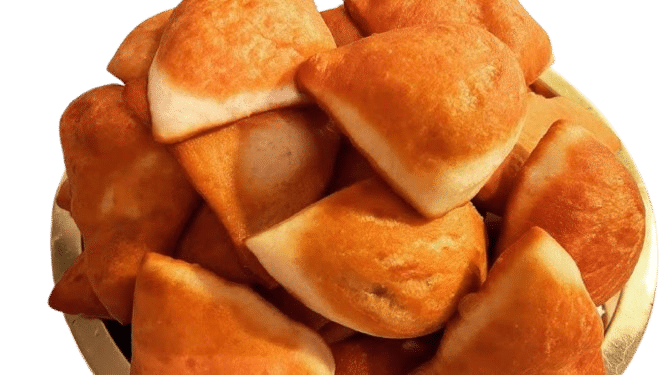
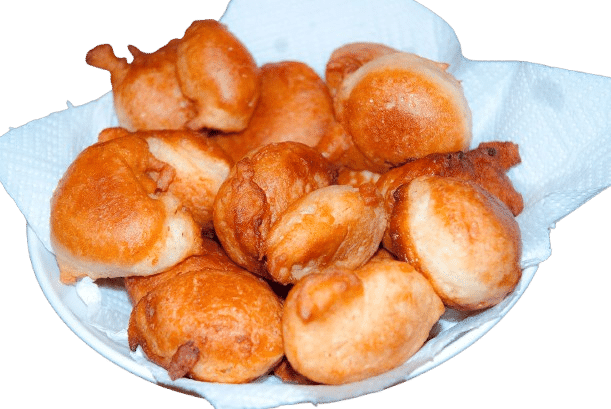
Beignet is the resulting product of a mixture of ingredients such as flour, sugar, salt and yeast. This dough is deep fried to produce the additive spongy Beignet balls. Based on individual tastes and preferences, other ingredients may be added to create a slight variation in the basic composition. These include butter, chocolate, raisins, nutmeg, vanilla and banana. Following preparation, the balls may be covered in sugar, or chocolate, or simply eaten with a favorite strawberry, guava or peach, jam or jelly. The preferred state of Beignet is to consume them shortly following preparation. If they must be stored, they are best preserved by freezing and placed in an oven or air fryer prior to future consumption. These methods of reheating have been found to restore them to their post frying texture. Microwaving Beignet should be a last option – only used when it is certain that the entire portion placed in the microwave will be consumed following heating. If not, microwave heating tends to render the balls very hard and unpleasant to eat once they return to room temperature.
The origin of Beignet
What Beignet and Cassava (Yuca) have in common is the mystery surrounding their origins. These items are so widely used in Africa that a mere suggestion that they could not have an African origin would be contentiously debated. History however has it on record that Portuguese traders from Brazil brought Yuca to Africa in the 16th Century. Similarly, the origins of Beignet are recorded to be found in the Netherlands and brought to the West Coast of Africa by Dutch colonizers. The French take credit for introducing Beignet to its colonial territories that largely call the product by its French appellation – ‘Beignet!’ Like Chinua Achebe cautioned, until the Lion tells its story, the tale of the hunt will remain the hunter’s. It is hard to say with any degree of certainty which of these records is true without proper investigation as Africa has lost so much to the world owing to its historical inclination and preference for orally recorded history over written history. As the custodians of oral history exit the world scene, with them die these critical libraries. Africa’s children adopt a preference for recorded accounts over the wisdom of the elders as advised by “education’. Thus, they will remain mesmerized by what they find recorded by those who penned things down first.
How Beignet it is Used
Africa has certainly earned the rights to its ownership claims over both Yuca and Beignet regardless of their origins, owing to how ingrained these two items are woven into the fabric of African cuisine. African ingenuity is on full display through the diverse uses for Yuca either as a grated, fermented and cooked fufu or boiled, or sauteed into a porridge. Similarly, the sight of fried Beignet on the streets of Africa are as much a morning wakeup call as they are an evening ritual. This dish triples as a breakfast, lunch and dinner favorite owing to the strength of the mixture and what accompaniments are adapted to its consumption at the given meal. Corn porridge or ‘pap’ is eaten with Beignet at breakfast or dinner time but not typically for lunch. Specially seasoned Haricot would accompany Beignet to offer a complete and more nutritious meal option for lunch, dinner or at parties. The preparation of Beignet often entails what many perceive to be a simple mix be remains an art mastered by few owning to: its labor-intensive frying process; the time and patience buried into waiting on the mixture to rise; and the dexterous art of molding the balls for frying. Like with all forms of cooking, all may receive the same ingredients, but the output would be different with the inexperienced hand. A bad Beignet day is a huge loss in investment from a perspective of time and having to eat a product that is less than desirable. That is why its preparation is often left to those who have mastered the art.
What is in the Name Puff-puff?
The term Puff-puff is believed to have been coined by Akira Toriyama who used the term as noted in Chapter 5 of the Dragon Ball Manga, published in the Weekly Shonen Jump between December 1984 and January 15, 1985. The term puff-puff consequently has its roots in Japanese Dragon Warrior Games. It is a Japanese onomatopoeia for a lady rubbing her breast in someone’s face or, of someone placing their face in between breasts and having those breasts squeezed onto their face.
Names Of Puff-puff Around the World
COUNTRY
REGION
FLAG
NAME
SHAPE
IMAGE
Netherlands
Europe
Oliebollen; oaljekoek
Oval
France
Europe
Beignet
Oval
USA (New Orleans)
North America
Beignet
Square
Kazakhstan
Southeast Asia
Baursak
Triangle
Mongolia
East Asia
Boortsog or Baursaki
Spheres
Colombia
South America
Bunuelo
Oval
India
South Central Asia
Gulag Jamun
Oval
Brazil
South America
Bolinho de Chuva
Oval
Pakistan
South Central Asia
Gulag Jamun
Oval
Nepal
South Asia
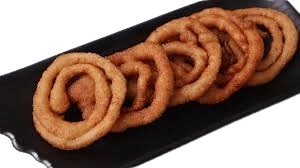
Sel Roti
Ring shaped
Names Of Puff-puff in Various Parts of Africa
Depending on where you find yourself on the African continent, you may find this deep-fried dough taking on different names. Below is a compilation of some of the names by which it is called and where they are used.